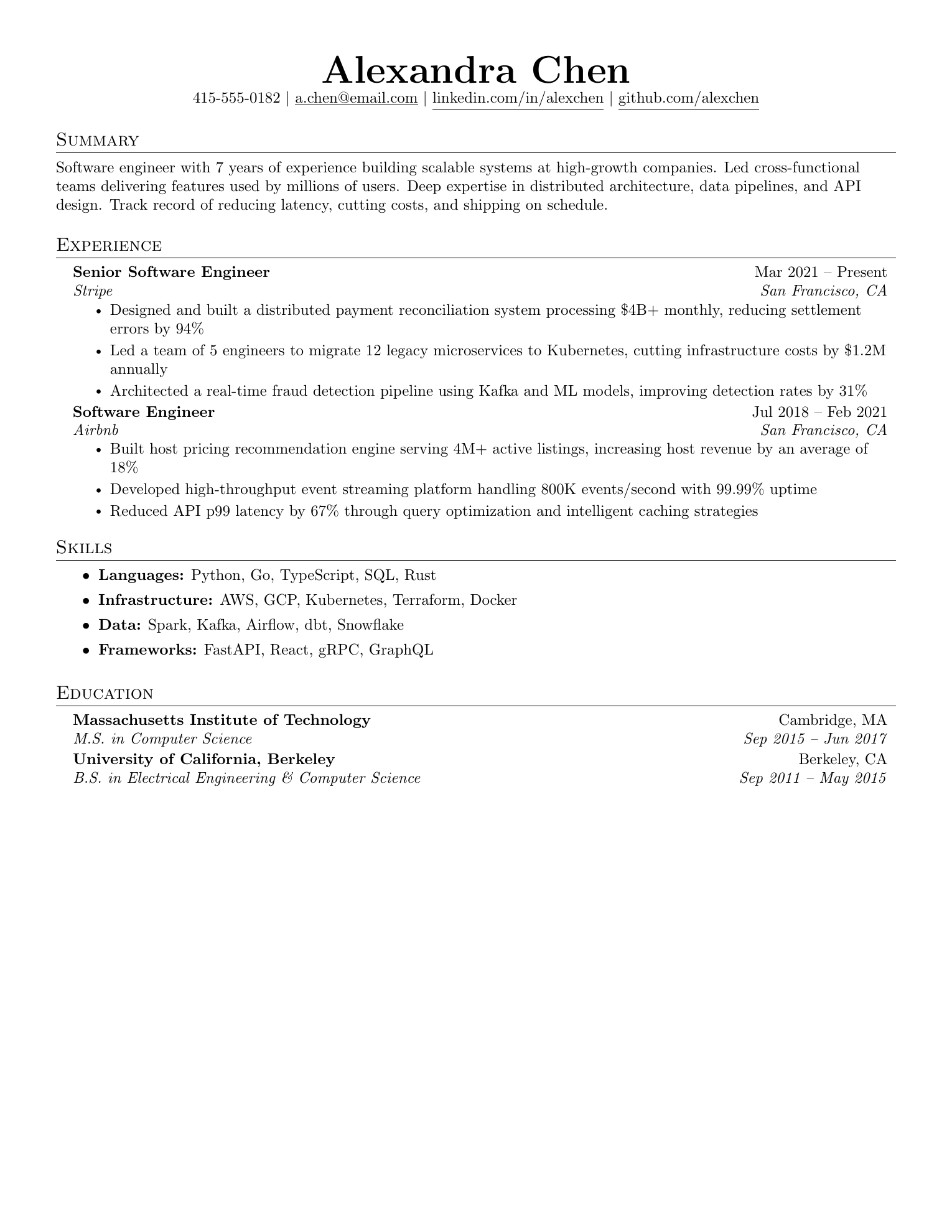
An ATS-friendly template designed for new grads and early-career engineers — with the right structure to showcase projects, internships, and technical skills when you don’t have years of professional experience yet.
Tailor yours nowRecent computer science graduate with hands-on experience building full-stack web applications and a passion for clean, testable code. Completed two software engineering internships and contributed to open source projects with 200+ GitHub stars. Looking to join a team where I can grow as an engineer while shipping real products.
Languages: Python, JavaScript, TypeScript, Java, SQL Frameworks: React, Next.js, Node.js, FastAPI, Ruby on Rails Tools: Git, Docker, AWS, PostgreSQL, Redis, GitHub Actions
When you don’t have years of professional experience, your projects section is your experience section. Hiring managers at tech companies know this — they’re not expecting a new grad to have led a team of 10. What they want to see is that you can build something real, end to end. A side project with actual users, a contribution to a real open source library, or even a well-scoped class project demonstrates that you can ship code, not just write it in a textbook.
As a new grad, your education section should sit high on the page — right after your summary. But the degree itself isn’t what matters most. What hiring managers look for is relevant coursework, capstone projects, and any research or teaching assistant experience that shows depth. If you took a distributed systems course and built a working key-value store, that’s worth mentioning. Your GPA only matters if it’s above 3.5; otherwise, leave it off and let your projects speak.
A common mistake on junior resumes is underselling internships. “Assisted the engineering team with various tasks” tells a hiring manager nothing. You should write internship bullets the same way a full-time engineer would: what you built, the technology you used, and the measurable outcome. If your intern project got shipped to production, say so. If it saved the team time, quantify it. Internship bullets written with specificity and impact are indistinguishable from mid-level experience bullets — and that’s exactly the point.
It’s tempting to list every technology you’ve encountered, but a bloated skills section backfires in interviews. If someone asks you about Kubernetes because you listed it, and all you did was follow a 20-minute tutorial, that’s worse than not listing it at all. Stick to languages and tools you’ve actually built something with. Three strong, honest skills beat fifteen aspirational ones.
Include the ones you actually have. Leave out the ones you’d struggle to discuss in an interview.
For entry-level engineers, the Classic template is the best choice. It’s clean, scannable, and ATS-safe — which matters when you’re competing against hundreds of applicants for new grad roles. Recruiters at large tech companies process thousands of entry-level resumes during hiring season, and a simple serif layout makes it easy for them to find what they need fast. Save the creative formats for when you have more experience to fill them with.
If you’re applying to startups or design-adjacent teams, the Modern template (with teal accents and a sans-serif font) is a good alternative. But when in doubt, Classic is the one that never raises eyebrows.
Use this templateTurquoise builds a tailored, ATS-friendly resume for any software engineering role in minutes — even entry-level positions. It highlights your projects and internships in the right way, using your real experience instead of generic AI filler.
Try Turquoise free