Frontend Engineer Resume Template

A template built for frontend engineers who own the user experience — structured to showcase the React and TypeScript depth, UI performance work, design system contributions, and accessibility improvements that engineering managers actually evaluate in a resume screen.

Tailor yours now
Priya Sharma
priya.sharma@email.com | (415) 555-0247 | linkedin.com/in/priyasharma-fe
Summary

Frontend engineer with 5 years of experience building high-performance web interfaces at scale. Currently leading design system development at Figma, where I architected a component library of 60+ React components used across 4 product teams that reduced UI development time by 40% and improved Largest Contentful Paint scores by 52% across the platform. Deep expertise in React, TypeScript, and performance optimization with a track record of shipping accessible, pixel-perfect interfaces that move product metrics.

Experience
Senior Frontend Engineer
Figma San Francisco, CA
  • Architected and built a design system of 60+ React components with TypeScript and Storybook, adopted by 4 product teams and reducing UI development time by 40% while eliminating 90% of visual inconsistency bugs
  • Optimized frontend bundle size from 2.1MB to 680KB through code splitting, tree shaking, and lazy loading with Webpack, improving Largest Contentful Paint by 52% and reducing bounce rate by 18%
  • Led a 3-engineer initiative to achieve WCAG 2.1 AA compliance across the editor, remediating 85+ accessibility violations and reducing support tickets from users with assistive technologies by 60%
Frontend Engineer
Vercel San Francisco, CA
  • Built the dashboard analytics UI in Next.js and TypeScript, serving 150K+ developers with p95 page loads under 900ms — a 58% improvement over the previous implementation
  • Designed and implemented a reusable charting component library using D3.js and React, adopted across 3 product surfaces and reducing frontend development time for data visualizations by 45%
  • Implemented end-to-end performance monitoring using Web Vitals API and custom instrumentation, identifying and fixing 12 rendering bottlenecks that improved aggregate CLS scores by 73%
Skills

Core: React, TypeScript, Next.js, CSS/Tailwind, HTML5   Tooling: Webpack, Vite, Storybook, Jest, Playwright   Performance: Core Web Vitals, code splitting, bundle optimization, lazy loading   Practices: Design systems, accessibility (WCAG 2.1), responsive design, code review

Education
B.S. Computer Science
University of California, Berkeley

What makes a strong frontend engineer resume

Lead with performance metrics, not framework lists

Every frontend engineer can list React and TypeScript. What separates a strong resume from a generic one is showing that you understand what happens after the code ships. “Improved Largest Contentful Paint by 52%” and “reduced bundle size from 2.1MB to 680KB” tell a hiring manager you think about the user experience in measurable terms, not just component architecture. Core Web Vitals scores, load times, and bundle sizes are the performance language that frontend teams actually speak — and seeing them on a resume immediately signals seniority.

Design system work is your highest-leverage bullet

Nothing demonstrates frontend leadership faster than design system ownership. “Built a component library of 60+ React components adopted by 4 product teams, reducing UI development time by 40%” tells a hiring manager three things: you think in reusable abstractions, you ship work that scales beyond your own team, and you can quantify infrastructure impact. Any engineer can build a button component. The ones who architect token systems, write Storybook documentation, and drive adoption across teams are the ones who get staff-level conversations.

Accessibility is a competitive advantage, not a checkbox

Most frontend resumes ignore accessibility entirely, which means any bullet about WCAG compliance, screen reader testing, or keyboard navigation immediately differentiates you. “Led a 3-engineer initiative to achieve WCAG 2.1 AA compliance, remediating 85+ violations and reducing support tickets from users with assistive technologies by 60%” shows that you understand frontend engineering extends beyond visual polish. Companies face real legal and reputational risk from inaccessible products — showing you take it seriously is a genuine signal of engineering maturity.

Quantify user-facing impact, not just technical metrics

Bundle size and LCP matter, but they’re means to an end. The strongest frontend resume bullets connect technical work to user outcomes: “reduced bounce rate by 18%” or “improved aggregate CLS scores by 73%.” If you optimized rendering performance, say what that meant for engagement. If you built a component library, say how much faster other teams shipped. Hiring managers are looking for engineers who understand that the browser is a delivery mechanism for business value, not an end in itself.
Key skills for frontend engineer resumes

Include what you can defend in a technical interview. Leave off anything you last touched in a tutorial.

Technical Skills

React TypeScript Next.js CSS / Tailwind Web APIs Storybook Webpack Vite Jest Playwright D3.js HTML5 Git Figma

What Frontend Interviews Focus On

Performance Optimization Component Architecture Design Systems Accessibility (WCAG) State Management Responsive Design Core Web Vitals Browser Rendering Cross-browser Compatibility Design Collaboration

Recommended template for frontend roles

Modern resume template preview

Modern

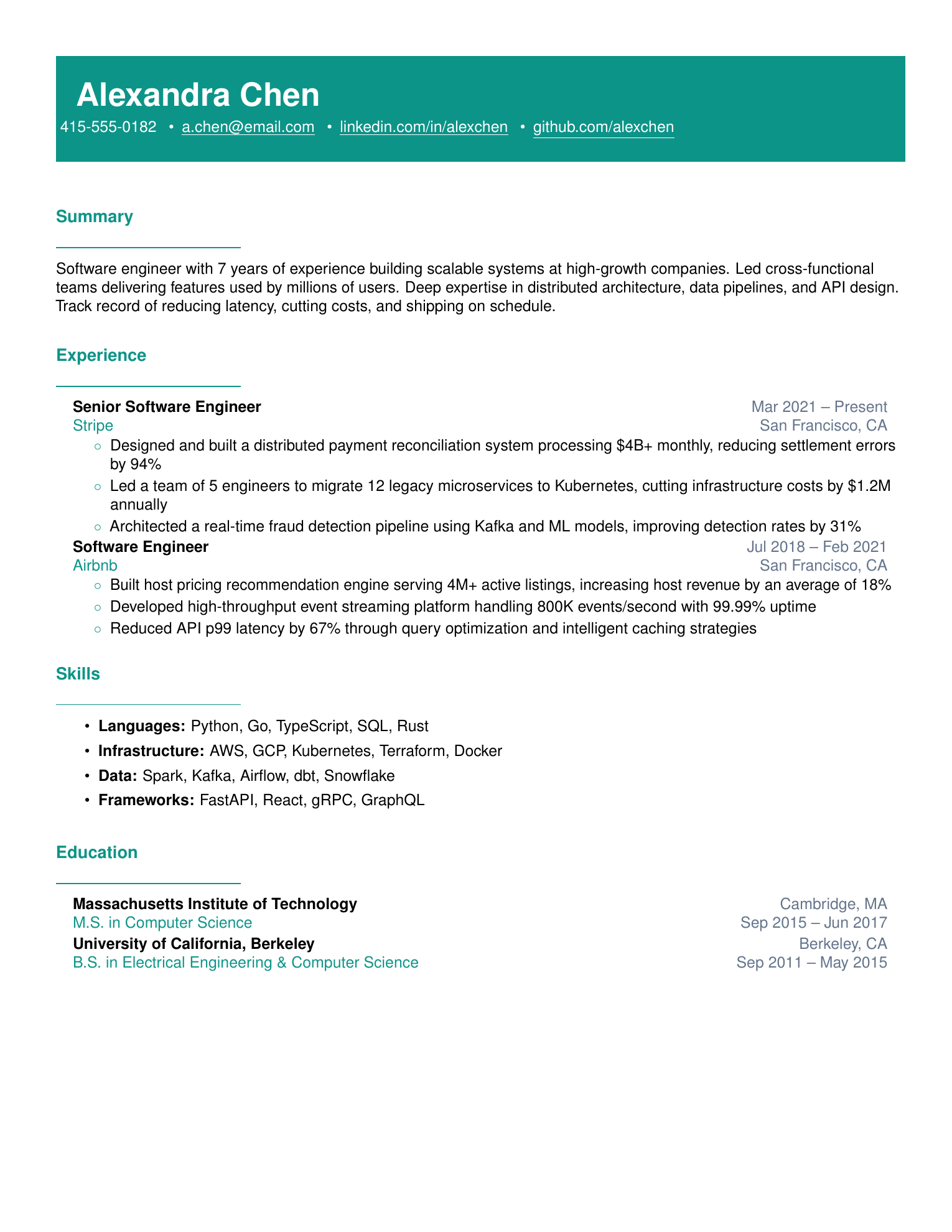
For frontend engineering roles, the Modern template is the best fit. Its clean sans-serif typography and contemporary layout reflect the same design sensibility that frontend teams value in their engineers. The structured format gives your component architecture, performance metrics, and design system work room to breathe while remaining ATS-friendly. A frontend engineer’s resume should demonstrate visual taste without sacrificing readability — precisely what this template delivers.

Use this template

Frequently asked questions

Should I include backend skills on a frontend engineer resume?
Only if the job posting mentions them. If the role asks for “familiarity with REST APIs” or “comfort working with backend engineers,” a line showing you can read a Node.js endpoint or query a database is useful. But don’t pad your skills section with Express, PostgreSQL, and Docker just to look full stack. Frontend hiring managers want depth in the browser, not breadth across the stack. List what you’d be comfortable whiteboarding, and let your bullet points show that you can collaborate across boundaries without pretending you own them.
How do I show design system work on my resume?
Treat it like any other engineering project: name the system, state the scale, and quantify the outcome. “Built and maintained a design system of 40+ React components used across 3 product teams, reducing UI development time by 35% and cutting visual inconsistency bugs by 60%” tells a hiring manager exactly what you built and why it mattered. Avoid vague lines like “contributed to the design system.” If you built the token architecture, say so. If you wrote the Storybook documentation, say that. Specificity is what separates a design system contributor from a design system leader.
Do frontend engineers need to show accessibility experience?
Yes, and it’s increasingly a differentiator. Most frontend resumes ignore accessibility entirely, which means even a single bullet about WCAG compliance, screen reader testing, or keyboard navigation improvements will stand out. “Audited and remediated 120+ accessibility violations across the product, achieving WCAG 2.1 AA compliance and reducing support tickets from visually impaired users by 45%” is the kind of bullet that signals engineering maturity. Companies face real legal and reputational risk from inaccessible products, so showing you take it seriously is a genuine competitive advantage.

Ready to tailor your frontend engineer resume?

Turquoise builds a tailored, ATS-friendly resume for any frontend role in minutes — structured to highlight your UI performance work, component architecture, and the design systems you’ve built and shipped, using your real experience.

Try Turquoise free